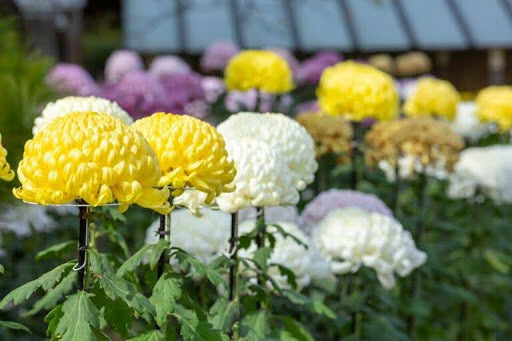
October is the month of Kiku-mi (菊) - chrysanthemum flower viewing.
Gardens, temples, and shrines showcase chrysanthemum exhibitions across the nation. If you plan to visit Tokyo, these are the places you can enjoy Kiku-mi:
The chrysanthemum is the crest of the Japanese Imperial Family.
Why did the chrysanthemum become the Imperial crest? The Emperor Go-Toba, 82nd Emperor who ascended to the throne in 1185 and abdicated in 1198 in favor of his son, used it as a personal symbol of power. The flower is associated with longevity, nobility, and strength, making it a suitable representation of the imperial family. This tradition was formalized during the Meiji period (1868 – 1912).
Imperial Family Crest 16-Petal Chrysanthemum Flower
After the Kiku-mi, go to one of the Depachika (department store food courts) or supermarkets. You will find both fresh and dried edible chrysanthemum flowers and petals in purple or yellow colors.
We blanch them in hot water, drain them, and mix them in the salad or use them as a garnish. Edible chrysanthemum flowers aid liver health and have anti-inflammatory and antioxidant properties. Food is medicine.
I love Japanese curry. I make it often in autumn.
My version contains plenty of onions, some ginger and garlic, S&B curry spices, and home-made chicken stock. Onions, ginger, and garlic have traditionally been valued for supporting the mucous membranes of the nose and throat, creating a protective barrier against the season's dry air. Many spices commonly found in curry powder, including cumin and coriander, are thought to aid digestion, encourage healthy bowel function, and support overall circulation.
One of curry's most important ingredients is turmeric.
Widely recognized for its anti-inflammatory and antioxidant properties, turmeric may help support the immune system during the seasonal transition from warm weather to colder days.
One important consideration when enjoying curry in autumn is to moderate the heat level. Excessively spicy foods may contribute to internal heat and dryness. A gently spiced, mildly sweet curry can be warming and comforting, while an overly hot curry may leave the body feeling dehydrated.
For me, a well-balanced Japanese curry is one of autumn's most satisfying dishes: nourishing, comforting, and perfectly suited to the season.
Japanese Curry and Kaigun Curry: A Navy Tradition
The Japanese Navy (Kaigun) played a significant role in popularizing curry rice throughout Japan.An early curry recipe appeared in 1908 in the Kaigun Kappōjutsu Sankōsho (Naval Cooking Reference Manual).
The recipe was simple:
Cut meat, carrots, onions, and potatoes into cubes.
Cook flour in rendered beef fat until golden. Add curry powder.
Add curry powder, stock, meat, and vegetables.
Simmer until cooked and season with salt.
Serve over steamed rice with red pickled ginger.
Curry rice suited large-scale naval kitchens. It was easy to prepare, could be cooked in a single large pot, and provided a filling and nutritious meal for sailors.
As curry became a regular part of naval life, many servicemen developed a taste for it and continued eating it after returning home. Over time, curry rice spread from naval kitchens to households across Japan and became one of the nation's favorite comfort foods.
Curry rice was also introduced in Western-style restaurants. Historical records show that in 1877, Tokyo's Fūgetsudō served curry rice in a Western manner, accompanied by a spoon, fork, and knife, offering diners a fashionable taste of modern cuisine.
Today, whether enjoyed at home, in a restaurant, or as part of Japan's naval culinary heritage, curry rice remains a beloved dish that combines comfort, nutrition, and tradition.
Overprocessed Food
Curry roux cubes are readily available in Japanese grocery stores and are certainly convenient for anyone who wants to prepare a quick curry dinner. I choose not to use them.
Most commercial curry roux cubes are ultra-processed foods. They often contain ingredients such as yeast extract, flavor enhancers, acidulants, emulsifiers, flavorings, and other additives designed to create a consistent flavor profile. As a result, many curries made with packaged roux taste remarkably similar.
I published my first curry rice recipe many years ago.
Recently, I revisited that recipe and realized how much my approach to making curry has evolved over time. You can find my revised version here. It is simple, but it does require a little patience and attention at the stove. Cook it slowly and stir occasionally to prevent the bottom of the pot from scorching.
Taste, of course, is subjective. I love this curry, but it may not be exactly what you are looking for. If so, I encourage you to use the recipe as a starting point. Adjust it, experiment, and make it your own delicious curry.
The health of the gut microbiome has long been a topic of growing interest.
Today, we have access to more food choices than ever before, often more than we need to satisfy our hunger. While food is essential for survival, we also eat for comfort, convenience, pleasure, and habit.
Many previous generations lived through periods of food scarcity, and hunger remains a reality for communities around the world. Yet even in places where food is plentiful, unhealthy eating habits are common.
The challenge today is often not finding enough food, but making mindful choices about what we eat. By choosing nourishing whole foods, we can better support our gut health and overall well-being.
To learn more about the connection between food and gut health, I recently spoke with Ann Yonetani, founder and owner of NYrture, a Brooklyn-based producer of fresh natto.
A passionate advocate for microbiome health, Ann believes that a healthy gut microbiome is the foundation of overall wellness and that natto is one of the most effective probiotic foods for supporting it.
According to Ann, our intestines contain trillions of microorganisms that form a complex ecosystem influencing digestion, immunity, metabolism, mood, and overall well-being. She believes that maintaining a healthy microbiome is key to a healthier lifestyle and that natto is among the most effective probiotic foods for supporting gut health.
Natto is made by fermenting soybeans with Bacillus subtilis (B. subtilis), a beneficial bacterium known for its ability to survive digestion and reach the intestines.
Unlike many fermented foods that rely on lactic acid fermentation, such as bread, miso, soy sauce, and sake, natto is unique because it undergoes alkaline fermentation. In contrast, shoyu (soy sauce) is made using koji and undergoes a more complex fermentation involving molds, yeasts, and lactic acid bacteria.
This unique fermentation process gives natto its distinctive characteristics, including its sticky texture, pungent aroma, and rich nutritional profile.
Natto's flavor can be an acquired taste, and I won't argue with that.
Here is a good tip if you want to try natto or include it more regularly in your diet. I recently added rice vinegar alongside the traditional seasonings of shoyu (soy sauce) and Japanese yellow mustard. The vinegar surprisingly and dramatically balanced natto's otherwise one-dimensional flavor, and cuts some sliminess.
Ladies and gentlemen, there's more.
Natto not only supports gut health, but also contributes to bone and cardiovascular health and may help reduce inflammation.
I encourage you to try Ann's natto, which I would describe as truly "live natto," compared to the frozen versions commonly sold in Styrofoam containers at many Japanese food stores. And here's some good news: Ann's New York natto is available for delivery across America!
Here are a couple of recipes to get you started on your natto journey:
Natto Miso Soup
Traditional Natto Over Rice