



The health of the gut microbiome has long been a topic of growing interest.
Today, we have access to more food choices than ever before, often more than we need to satisfy our hunger. While food is essential for survival, we also eat for comfort, convenience, pleasure, and habit.
Many previous generations lived through periods of food scarcity, and hunger remains a reality for communities around the world. Yet even in places where food is plentiful, unhealthy eating habits are common.
The challenge today is often not finding enough food, but making mindful choices about what we eat. By choosing nourishing whole foods, we can better support our gut health and overall well-being.

To learn more about the connection between food and gut health, I recently spoke with Ann Yonetani, founder and owner of NYrture, a Brooklyn-based producer of fresh natto.
A passionate advocate for microbiome health, Ann believes that a healthy gut microbiome is the foundation of overall wellness and that natto is one of the most effective probiotic foods for supporting it.
According to Ann, our intestines contain trillions of microorganisms that form a complex ecosystem influencing digestion, immunity, metabolism, mood, and overall well-being. She believes that maintaining a healthy microbiome is key to a healthier lifestyle and that natto is among the most effective probiotic foods for supporting gut health.

Natto is made by fermenting soybeans with Bacillus subtilis (B. subtilis), a beneficial bacterium known for its ability to survive digestion and reach the intestines.
Unlike many fermented foods that rely on lactic acid fermentation, such as bread, miso, soy sauce, and sake, natto is unique because it undergoes alkaline fermentation. In contrast, shoyu (soy sauce) is made using koji and undergoes a more complex fermentation involving molds, yeasts, and lactic acid bacteria.
This unique fermentation process gives natto its distinctive characteristics, including its sticky texture, pungent aroma, and rich nutritional profile.

Natto's flavor can be an acquired taste, and I won't argue with that.
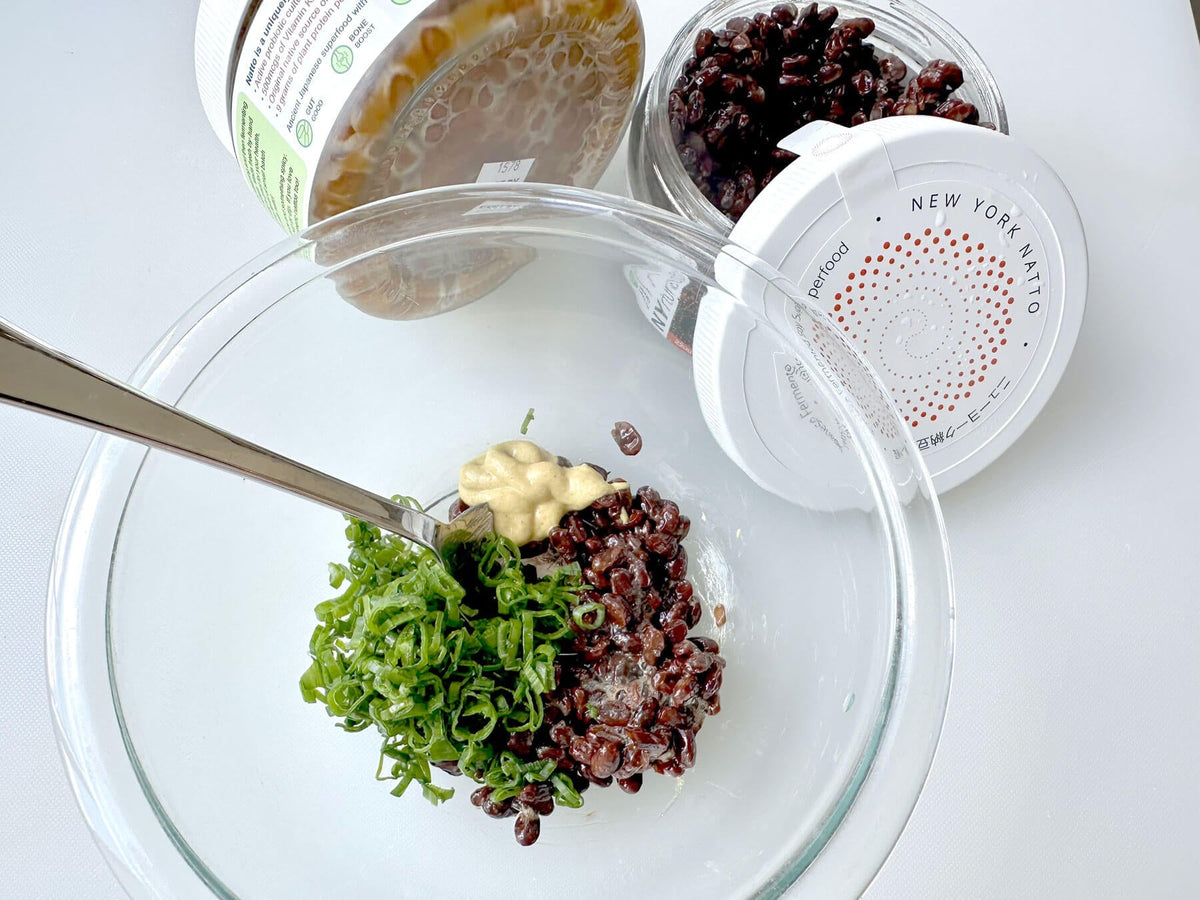
Here is a good tip if you want to try natto or include it more regularly in your diet. I recently added rice vinegar alongside the traditional seasonings of shoyu (soy sauce) and Japanese yellow mustard. The vinegar surprisingly and dramatically balanced natto's otherwise one-dimensional flavor, and cuts some sliminess.
Ladies and gentlemen, there's more.
Natto not only supports gut health, but also contributes to bone and cardiovascular health and may help reduce inflammation.
I encourage you to try Ann's natto, which I would describe as truly "live natto," compared to the frozen versions commonly sold in Styrofoam containers at many Japanese food stores. And here's some good news: Ann's New York natto is available for delivery across America!


