



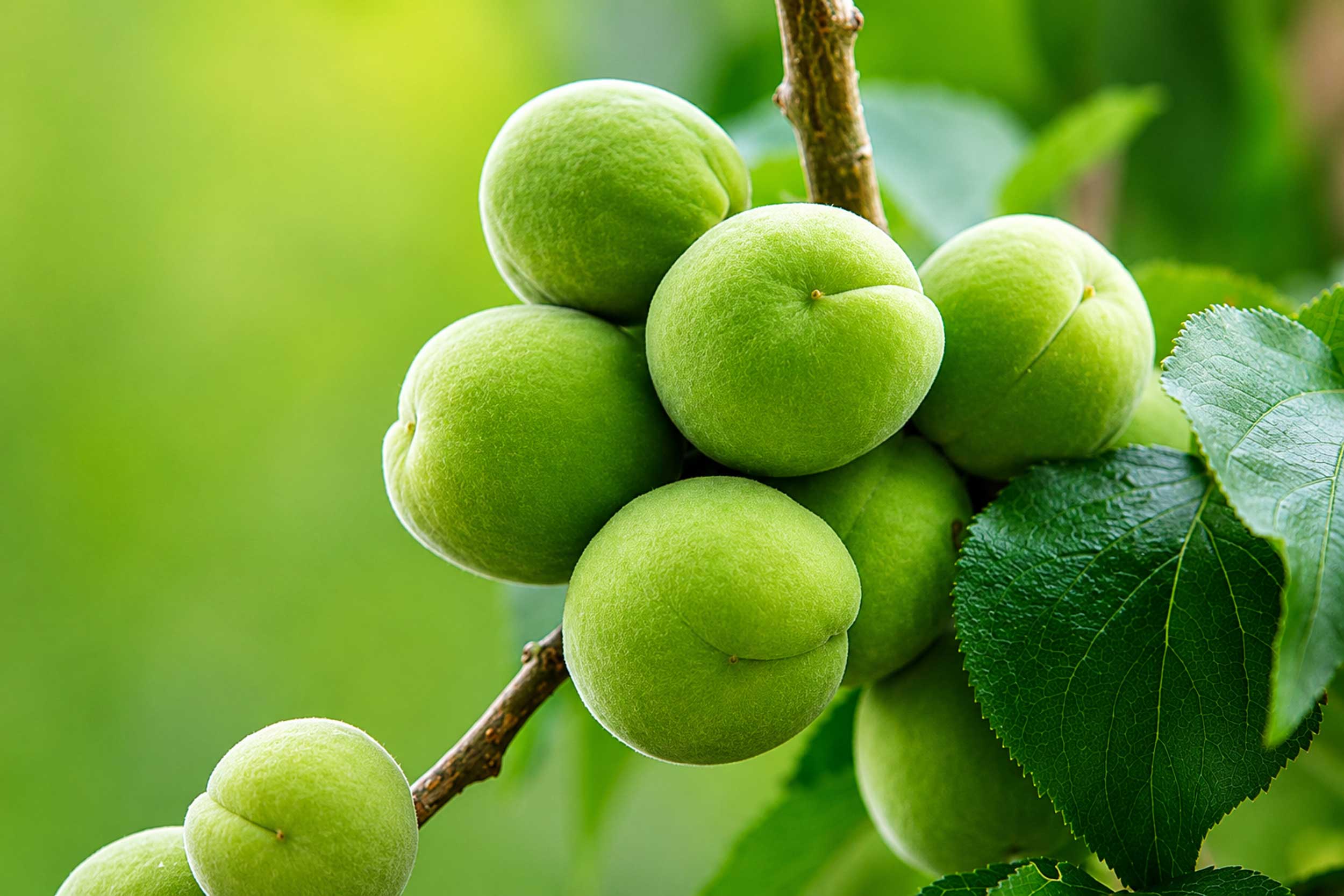
I made a mistake last year when I attempted to make umeshu using the wrong variety of fruit.
It prompted me to revisit a basic question: What exactly is Japanese plum, ume—Prunus mume? Although I often use the word “plum,” ume is botanically closer to the apricot. The tree originated in the Yangtze River basin, the same region from which rice cultivation ultimately came to Japan—though the two arrived at very different times.

Raw ume is far too sour and contains high levels of amygdalin (a cyanogenic compound), making it unsuitable for eating fresh. Through salt-drying and alcohol infusion—seen in traditions such as umeboshi and umeshu—Japanese culinary practice transforms an otherwise inedible fruit into something both edible and culturally meaningful.
Ume for Umeshu
Umeshu is made by steeping fresh ume in a distilled spirit of about 25% alcohol, typically a neutral shōchū or white liquor called kajitsushu, along with rock sugar. Ume contains a high concentration of citric acid, which gives the fruit its signature tart, refreshing character and helps preserve the liqueur.
Green ume have firm, waxy skins that hold their shape during the long steeping period. With a water content of about 85%, the fruit gradually releases its moisture into the alcohol over the course of roughly 12 months, developing the liqueur’s aroma and flavor. The sugar plays its own role, drawing out the tart juices and rounding the final taste.

Last Year’s Disaster
Every year, I face the same challenge: finding ume at just the right stage of greenness. Last year, I stumbled upon an online store, placed an order, and received the wrong fruit—Persian green plums. I went ahead anyway and made “umeshu” with untouched whisky and bourbon. Nothing looked promising.
In February, curiosity got the better of me. I opened the jar. Instantly, a fierce wave of alcohol hit my nose, followed by a smoky blast that rushed out as if escaping confinement. I closed the lid immediately, like trying to trap a wild animal in a jar.
For now, I’ve decided to leave the plums in their luxurious bath for a little while, adding some rock sugar, and watch closely what they choose to become.


