



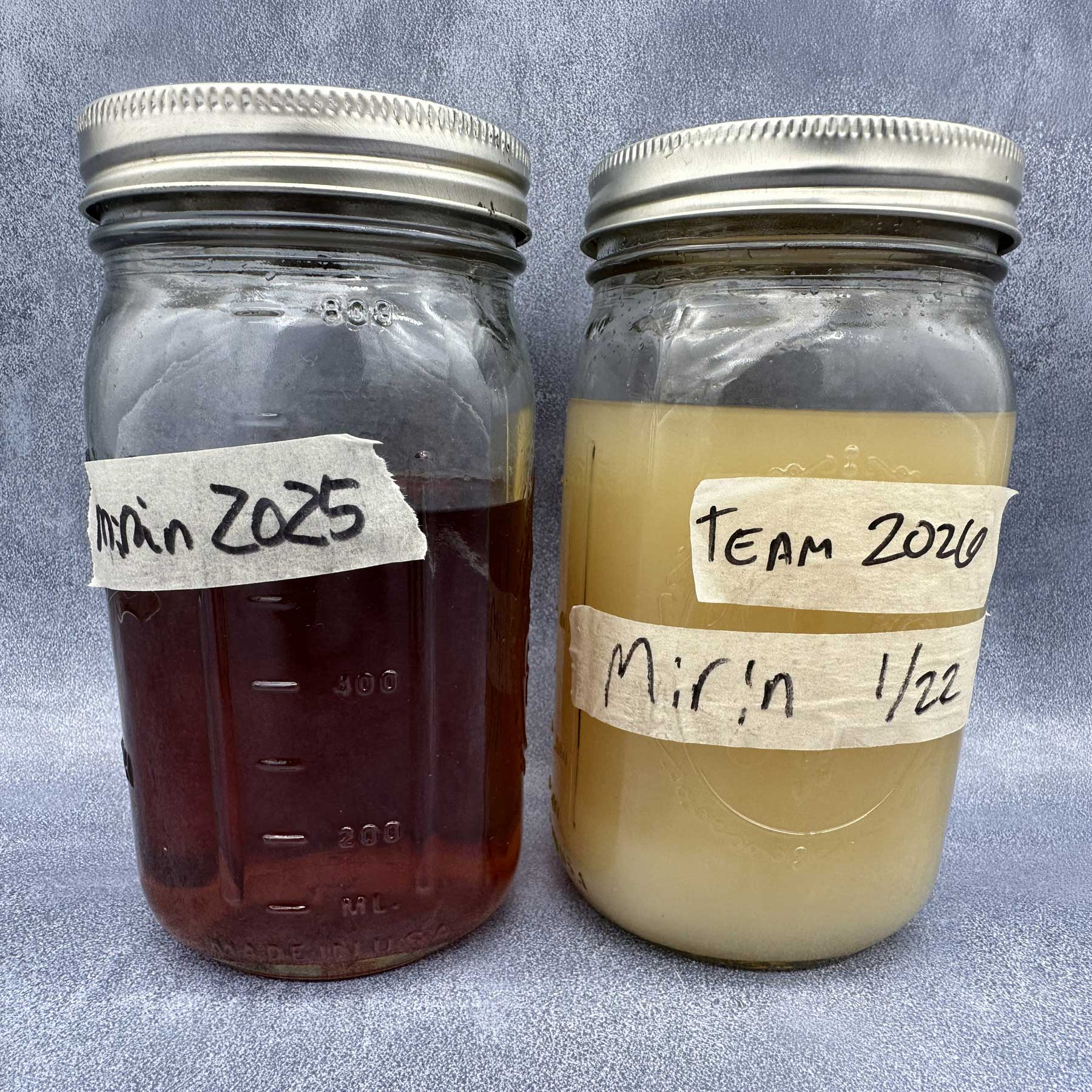
This week I finally filtered the homemade mirin that Team 2026 students began back in mid-January.
At school, anything that isn’t a dry good must live in the refrigerator, so our mirin stayed chilled until April 15, the end of the Spring Semester. Once I brought it home, I moved it to an ambient environment and let it mature properly.
Last year, in the spirit of accessibility, I experimented with vodka instead of shochu. It was a well-intentioned idea, but it taught me exactly why tradition matters.

What Mirin Really Is (and Isn’t)
Real mirin is one of Japan’s most misunderstood ingredients. Most bottles in American markets are corn-syrup “mirin-style seasoning,” not the true product made only from mochigome, kome koji, and shochu.
Authentic mirin is naturally sweet, aromatic, and complex—rare even in Japan because it requires small-batch production, long aging, and high-quality ingredients. Many people have never tasted the real thing.

Vodka and Shochu: Both Distilled, But Not the Same Animal
Vodka is distilled to near purity. Almost all fusel alcohols, esters, and organic acids are stripped away—the very compounds that soften bitterness and create roundness.
Even though the koji enzymes worked hard, the vodka-based mirin turned flat, edgy, and bitter. I made things worse by leaving it unfiltered in the refrigerator for 12 months. Cold storage slowed the beneficial reactions and amplified the harsh ones:
- bitter peptides from protease
- oxidized sugars
- degraded lipids
A good reminder that temperature matters.
Why Shochu Works in Mirin (and Vodka Doesn’t)
Fusel alcohols and organic acids—the backbone of mirin’s round, complex sweetness—are created during fermentation, just like in sake. Yeast and lactic acid bacteria transform amino acids and starches into these flavorful components.
In shochu, they remain. Why? Because shochu is distilled only once, at a low strength, so these aroma compounds stay in the final spirit. When mixed with koji rice and glutinous rice, they bind beautifully with the sugars and amino acids released during mirin making.
This is the harmony vodka cannot create.
Warning: Choose the Right Shochu
There are two categories of shochu in Japan:
- Otsu-rui (本格焼酎) — single distillation
- Ko-rui (甲類焼酎) — multiple distillation
Choose Otsu-rui. Using Ko-rui in homemade mirin often produces the same harsh, slightly bitter alcohol note that occurs with vodka. Neutral spirits simply lack the congeners needed for mirin’s balance.
If you want to explore this further, you can dive into Ko-rui vs Otsu-rui or learn how to fix bitterness in a batch.

Explore Further
If this umeshu adventure makes you want to taste shochu at its source, I invite you to join the 2026 Kyushu tour – November 10-21. Kyushu—the destination of this year’s journey—is the birthplace and true heaven of shochu. Its traditions, terroir, and craftsmanship deserve their own spotlight, so I will save that story for the July Newsletter, where shochu will take center stage.

Team 2026 Homemade Mirin
When I filtered the Team 2026 students’ mirin—this was the first filtration, and I’ll do a second once the cloudy solids settle and the liquid becomes crystal clear—I tasted a small sample and confirmed that the flavor profile is developing correctly. At around 15°C, the optimal temperature for saccharification, koji enzymes convert rice starch into glucose, maltose, amino acids, and gentle umami. Shochu’s retained aroma compounds bind with these elements, creating the deep, rounded, elegant sweetness that defines true mirin.
Two years, two bottles, and one clear lesson: Mirin is not “sweet cooking wine.” It is a precise harmony of rice, koji, and alcohol. If one element changes, the entire flavor shifts.
Making Homemade Mirin
If you feel inspired to try this beautiful craft at home, please wait until October, when temperatures have cooled - the ideal time for mirin production. Until then, you can explore how to design a professional mirin for your own kitchen.


