



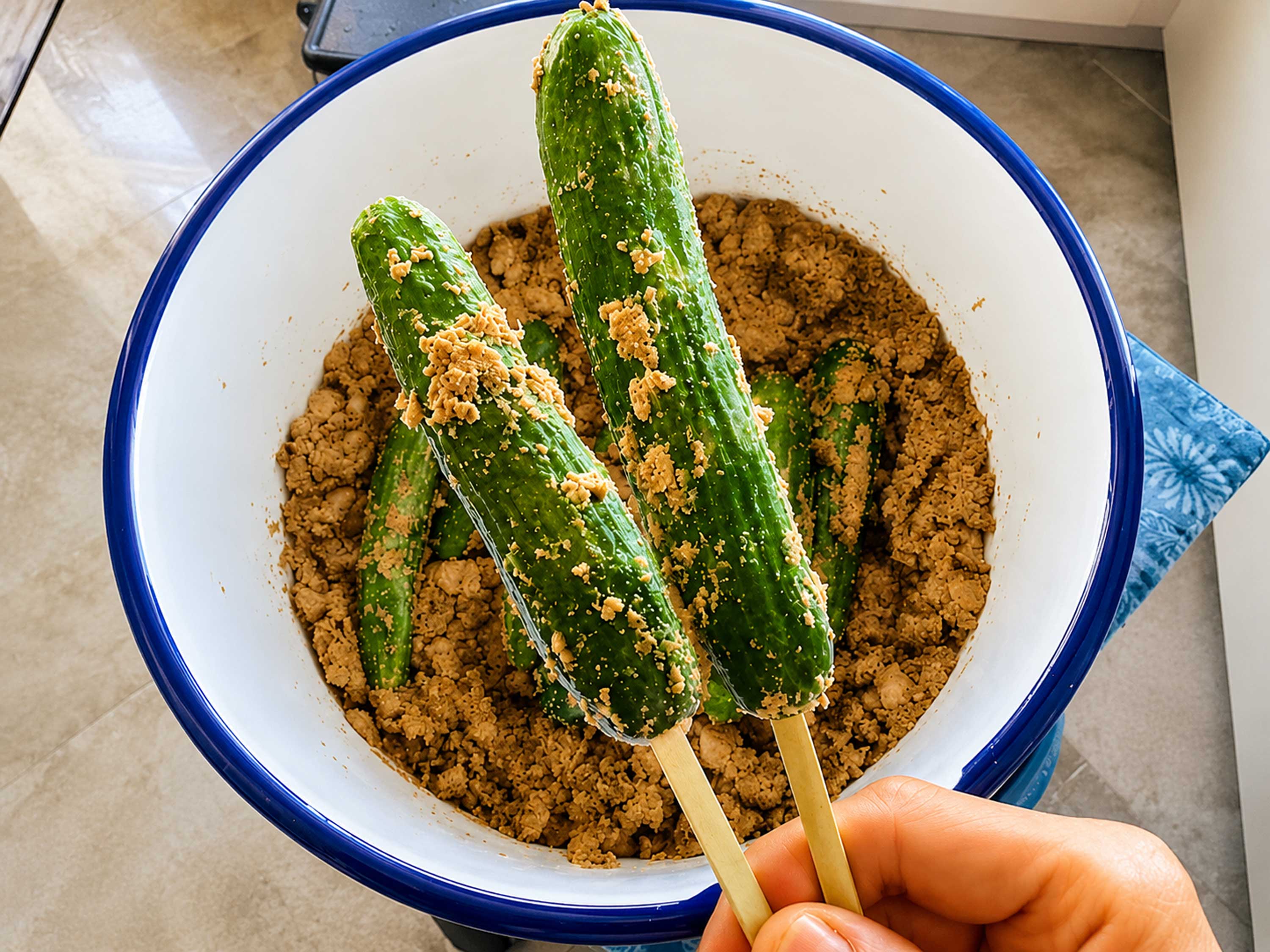
Why Summer Belongs to Nukazuke
Tsukemono—Japanese pickled vegetables—has always been seasonal, its character shaped by temperature, humidity, and the shifting behavior of microbes. In summer, when heat and moisture accelerate microbial activity, long fermentations become unstable.

As a result, traditional summer pickles rely on quick methods. Two styles define the season: asazuke 浅漬け and nukazuke 糠漬け.
Asazuke is the simplest: cut summer vegetables into thin slices, draw out excess moisture with salt first, and season lightly with new salt or vinegar. Nukazuke, by contrast, is pickled in an already-fermented rice-bran bed called nukadoko. It is the summer mainstay—fast, flavorful, and microbially resilient.

My Mother's Nukadoko
My mother was born and raised in Takada City in Niigata Prefecture, a northern region known for its cold climate and heavily salted winter pickles. She had never heard of nukazuke. After marrying a doctor, she moved to Kanazawa in Ishikawa Prefecture and eagerly began learning the local dishes.
One day, a neighbor introduced her to a pickle she had never tasted before: nukazuke. Her first reaction was a surprise — “complex, slightly tangy, sweet, and full of umami.” The neighbor shared a small scoop of her nukadoko and showed my mother how to start her own. In a sense, I grew up on those nukazuke from the time I was very young. My mother was 23 years old. That small gift became the beginning of a lifelong practice.

I made my nukadoko about twenty years ago.
Into the fresh mix of rice bran, salt, and water, I folded in one cup of my mother’s nukadoko — itself inoculated decades earlier with her neighbor’s well-cultivated bed. That single cup helped to jump-start the microbial community and gave my own nukadoko depth and complexity from the very beginning.

The Living Science of Nukadoko
Nukadoko has extraordinary microbial density—especially lactic acid bacteria (LAB) and yeast. According to the fermentation scholar, Takeo Koizumi, just one teaspoon (1–2 g) of nukadoko contains 10 billion microorganisms.
Summer vegetables are perfect for this living bed: cucumber, summer daikon, zucchini, colorful radishes, Hakurei turnips, carrots, tomatoes, beetroot, onion bulbs—almost anything you pull from the garden or market. At 77–86°F, the main microbes, especially LAB and yeast, become highly active, transforming fresh vegetables into nutrient-rich, umami-bright, tender-crisp bites in just 3 to 6 hours.

Nukadoko is more than a fermentation medium — it is a nutrient-laden rice bran bed that enriches the vegetables pickled into it.
Rice bran contains B-vitamins, minerals, amino acids, and antioxidants, and during fermentation, some of these compounds migrate into the vegetables.
Japanese food science research shows that a cucumber pickled in nukadoko can gain 5–9× more vitamin B1, and its vitamin C, vitamin K, and potassium can increase 1.5–3×, depending on temperature and pickling time. Fermentation increases nutrient availability and improves the vegetable’s ability to absorb these compounds.
During fermentation, lactic acid bacteria (LAB) reshape the vegetable’s surface microbiome, producing nukazuke’s mild acidic flavor, aroma, and crisp texture. The LAB does not survive stomach acidity. Nukazuke, therefore, is not a probiotic food in the strict sense, but fermentation produces organic acids, peptides, and other bioactive compounds that support digestion and nutrient absorption. The vegetables also supply their own fiber, and the rice bran adds extra fiber, supporting the microbes in the large intestine.

A Tradition That Spans Centuries
Historically, tsukemono reflects Japan’s long effort to manage aerobic and anaerobic bacteria and molds in a humid, subtropical climate. By the Edo period (1600–1868), tsukemono had become part of everyday life. In 1836, the Odawaraya pickle shop published Shiki Tsukemono Shio-kagen 四季漬け物塩嘉言, detailing sixty-four seasonal recipes and emphasizing precise salting for safety. Many of these lacto-fermented styles, including nukamiso, remain staples today.
Keeping the Tradition Alive
Each summer, I return to my nukadoko for its flavor and its rhythm. It feels like a true seasonal partner — one that asks for daily care and gives so much in return. For many families in Japan, tending a nukadoko spans generations, and I’m grateful to be part of that lineage.
This is the summer to make your own nukadoko. Again, vegetables pickled in nukadoko—nukazuke—support a healthy gut microbiome and help us feel grounded and nourished through the hot, active, humid months.


