



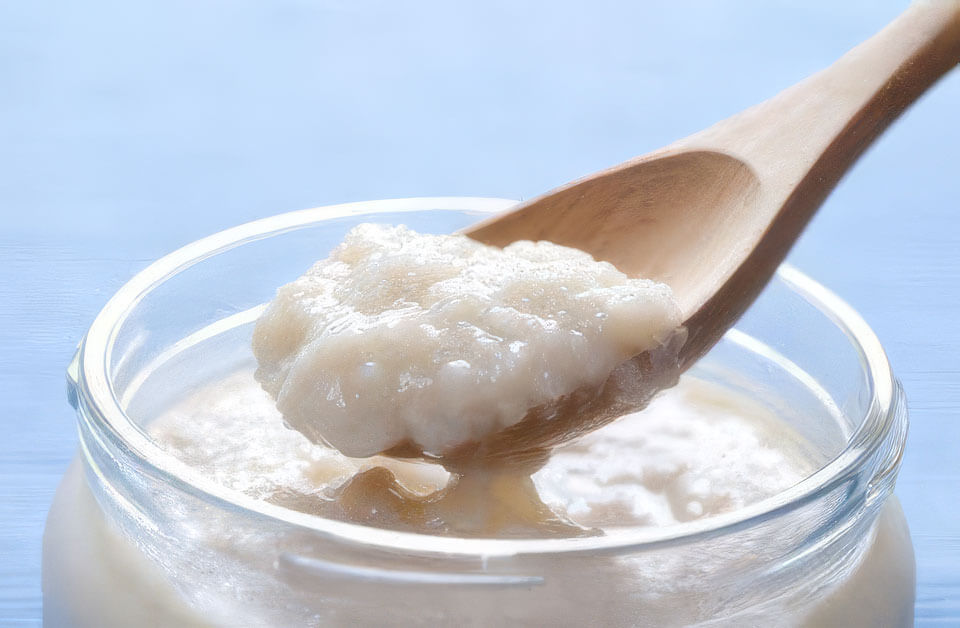
Shio-koji has made a remarkable comeback in modern Japanese kitchens.
Its roots go back to the Edo Period (1600–1868), when it was a popular everyday seasoning for common households.

Credit: Kokorocare, a company that carries a shio-koji product named Kankoji.
At its core, shio-koji is simple: rice koji, salt, and water. Yet behind that simplicity lies centuries of fermentation wisdom.
Rice koji is steamed rice inoculated with Aspergillus oryzae, the same fungal culture responsible for many of Japan’s iconic foods — sake, shoyu, mirin, miso, and rice vinegar. Koji is rich in active digestive enzymes, including amylase (which breaks down starch into sugars) and protease (which breaks down proteins into amino acids). These enzymes are what give shio-koji its gentle sweetness, rounded salinity, and natural umami.
Making shio-koji at home involves mixing koji rice, salt, and water, then stirring once a day as it matures. In summer, it takes about 4–5 days; in winter, about 10 days. After fermentation, I blend it in a sanitized food processor until smooth. This makes it ideal for pickling vegetables, marinating meat and fish, and adding umami to soups and stews.
But homemade shio-koji has one drawback: even when blended, it remains slightly grainy. If you marinate protein and then cook it, those tiny grains can burn, leaving unpleasant black specks on the surface of cooked proteins. Not ideal for presentation.
Good news for modern cooks
Hanamaruki Miso Company solved this beautifully by developing a clear liquid shio-koji. No more burning, no more grainy residue on pickled vegetables, and no more cloudiness in soups. Just clean, pure enzymatic seasoning.

I used Hanamaruki’s clear shio-koji in my fava bean soup — and for me, fava bean soup is always the moment I say, “Hello, early summer!” A small amount of shio-koji enhanced the beans’ natural sweetness and deepened the umami without adding heaviness.

Another recipe is shio-koji–marinated swordfish, baked in the oven. The shio-koji deepens the fish’s natural sweetness and amplifies its umami through the interaction of glutamate from the rice koji and inosinic acid in the fish, giving the finished dish a beautifully rounded, savory flavor.


